~1 million
Each human kidney contains about a million filtering units.
5 min readLast updated
Photo: SecretDisc · CC BY-SA 3.0
The short answer
Each kidney contains roughly a million nephrons: microscopic working units that filter blood, recover useful substances, and help adjust the composition of the fluid eventually excreted as urine. The number is an approximate anatomical description, not a count shared by every person.
Why it's true
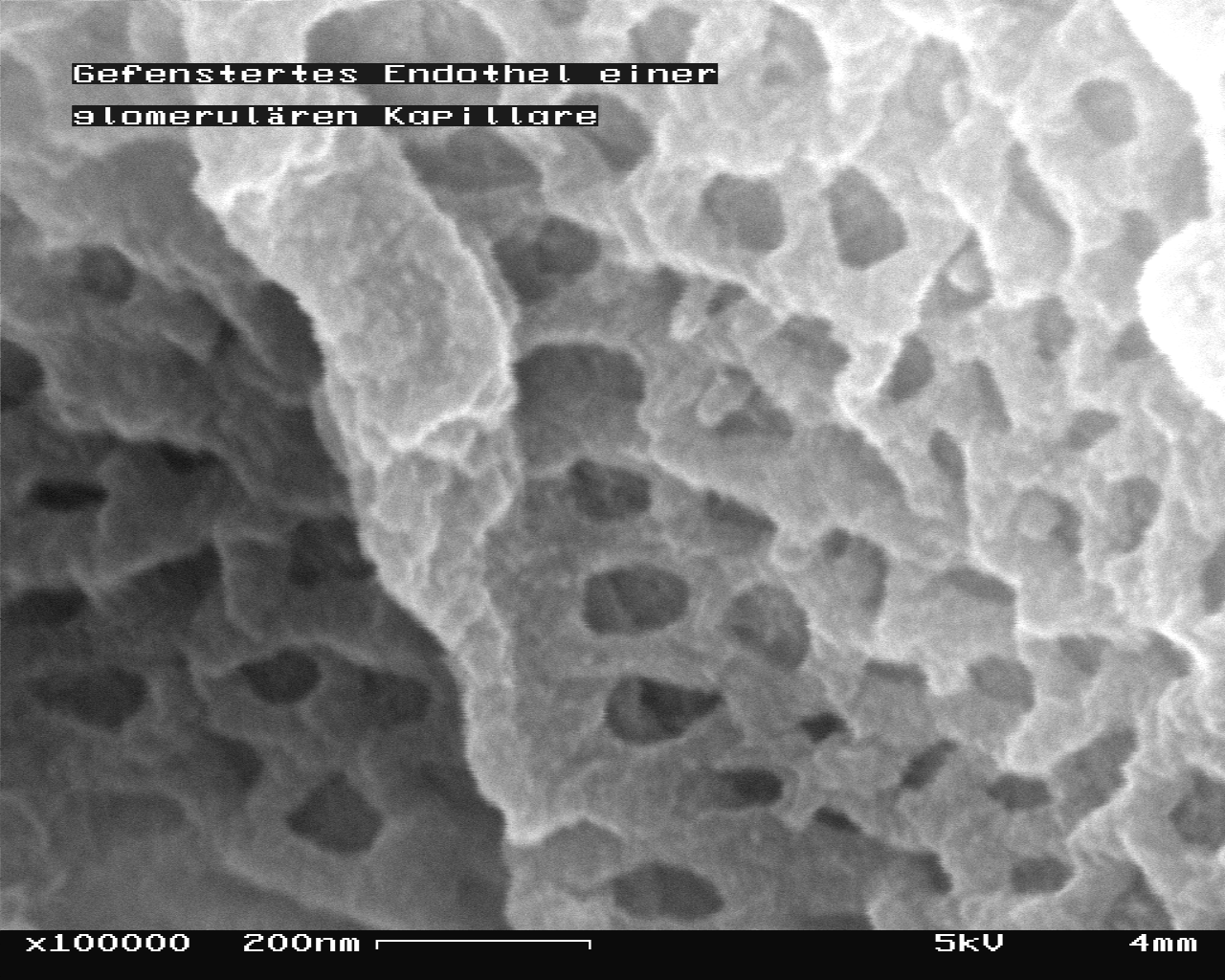
A nephron starts with a glomerulus, a tuft of tiny blood vessels inside a capsule. Pressure drives water and small dissolved substances across its filtering barrier. Blood cells and most large proteins normally remain in the circulation rather than passing into the filtrate.
The filtrate then enters a tubule, where surrounding blood vessels recover most of its water and many substances the body needs. Glucose, salts, and other materials are handled selectively. Filtration alone would discard far too much useful material to sustain normal physiology.
Tubules also transfer additional substances from blood into the developing urine. Together, filtration, reabsorption, and secretion let kidneys remove wastes while controlling water, acidity, and mineral balance. The finished urine is therefore very different from the fluid first filtered at the glomerulus.
By the numbers
~1 million
nephrons per kidney, approximately
2
main nephron components: glomerulus and tubule
2
usual number of kidneys
The backstory
The familiar description of kidneys as blood filters is useful but incomplete. A household filter mainly separates material into what passes through and what remains behind. Kidneys add a second, highly selective stage: they reclaim useful molecules and adjust what leaves according to the body’s changing requirements.
NIDDK describes healthy kidneys as filtering about half a cup of blood each minute. That is blood being processed, not an amount of urine produced. Most water passing into the nephron is returned to the circulation. Only the remainder, carrying dissolved wastes and excess substances, travels onward toward the bladder.
Nephrons operate within an extensive blood supply. Blood reaches the kidney through the renal artery, passes through progressively smaller vessels, and ultimately leaves through the renal vein. Urine takes a separate route through collecting structures and a ureter. Keeping those routes distinct explains why urine is not simply blood with its cells removed.
The wider picture
The million-nephron figure should not be read as a diagnostic threshold. People differ in the number of nephrons they possess, and a kidney’s performance depends on more than anatomy alone. Clinicians assess function using information such as blood tests that estimate filtration and urine tests that can reveal abnormal protein leakage.
Kidney regulation also protects other organs. Changing sodium and water retention influences circulating fluid volume; adjusting potassium helps support electrical activity in nerves and muscles. Removing acid and recovering bicarbonate contribute to acid-base balance. These tasks happen continuously, rather than only when someone notices a full bladder.
Urination is a later event than urine formation. The kidneys keep processing blood while the bladder stores the resulting fluid. Emptying the bladder therefore does not switch filtration on or off, and the interval between bathroom visits is not a direct measurement of nephron activity.
Worth remembering
- Urine results from selective processing, not indiscriminate drainage of blood.
- Nephron counts are approximate and vary between individuals.
- Kidney function includes electrolyte and acid-base regulation as well as waste removal.
In context
Filtration is only the opening step in making urine. If the kidneys discarded everything that entered their filters, they would lose substances the body needs. Nephrons instead combine a filtering structure with a tubule that modifies the filtered fluid. The final urine is therefore an adjusted output, not a sample of blood with only the cells removed or a direct measure of everything initially filtered.
A closer look
The filter and the recovery route
Blood enters a cluster of small vessels called a glomerulus. Its filtering barrier allows water and small substances into the nephron while normally retaining blood cells and most large proteins in the circulation. This separates filtration from simply letting blood leak into a drain.
The tubule then recovers much of the filtered water and useful dissolved substances. Other substances can move from blood into tubular fluid. These exchanges let the kidney regulate what stays in circulation and what eventually leaves the body, rather than treating every small molecule alike.
A unit works within a system
The nephron's surrounding blood supply is essential to these exchanges. Filtration, recovery, and secretion connect kidney structure to the wider circulation. Calling a nephron a filter is useful shorthand, but it hides the fine adjustment that follows the first filtering step.
The approximate count also should not become a personal performance score. Kidney function concerns the work done by the organs as a whole, and clinicians assess it with appropriate tests. A rounded anatomical average cannot reveal an individual's filtering ability or explain a laboratory result by itself.
Related facts
The same organs also participate in hormone-related regulation. Kidney chemical signals.
Microscopic vessels are central to nephron function. The branching vessel network.
Kidney filtration depends on the circulation driven by the heart. Blood circulation.
Blood cells normally remain in circulation while plasma water is filtered. Where blood cells originate.
Key terms
- Glomerulus
- A small blood-vessel cluster where filtration into a nephron begins.
- Reabsorption
- Movement of filtered water or substances back toward the blood.
- Tubular secretion
- Transfer of substances from blood into the nephron’s tubular fluid.
People also ask
Is urine just filtered blood?
No. After initial filtration, tubules recover useful substances and add others. Final urine has been substantially modified.
Do healthy filters normally pass blood cells?
They normally retain blood cells in the circulation. Blood in urine has several possible causes and warrants appropriate medical interpretation.
Are all filtered substances wastes?
No. Useful water, salts, and nutrients also enter the filtered fluid, which is why tubular recovery is essential.
Does the count tell me my kidney function?
No. A population-level anatomical estimate does not measure an individual’s function. Clinical assessment relies on relevant tests and context.
Do nephrons act independently of circulation?
No. Their filtering and transport functions depend on closely associated blood vessels and the blood delivered to them.


