Capillaries
Your body contains a vast network of microscopic blood vessels.
5 min readLast updated
Photo: Otávio Astor Vaz Costa · CC BY 4.0
The short answer
A commonly repeated estimate puts an adult's total blood-vessel length near 100,000 kilometers, enough for about two and a half trips around Earth. Treat this as a rough illustrative estimate, not a directly measured total or a universal value for every body.
Why it's true
Blood reaches tissues through a branching network rather than a handful of long tubes. Arteries divide into smaller vessels, and microscopic capillaries provide extensive exchange surfaces. Blood then returns through progressively larger veins. Adding the lengths of all those small branches produces a far greater total than considering only the visible major vessels.
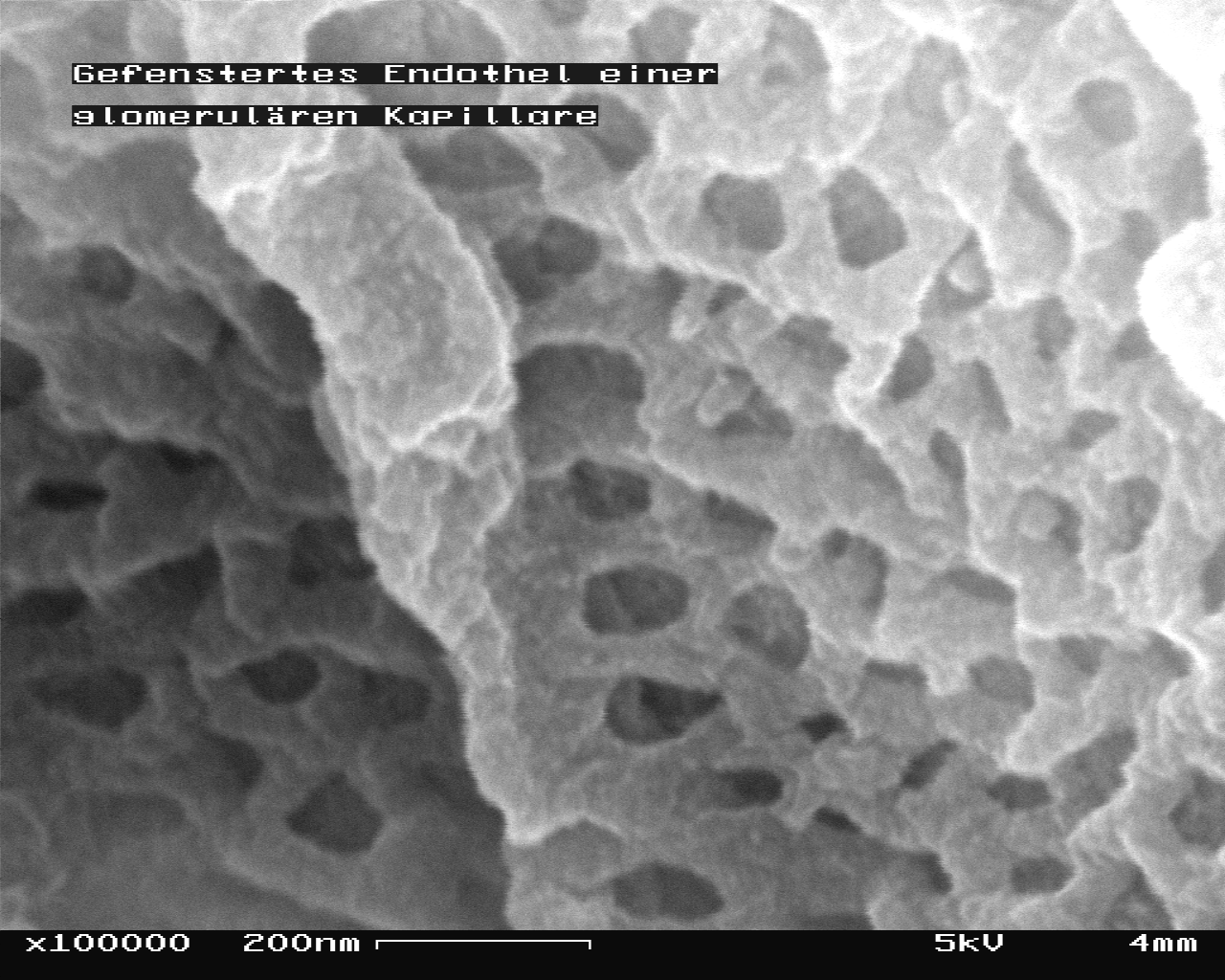
The enormous total in the familiar comparison depends heavily on the microscopic circulation. Capillaries are distributed through tissues where oxygen, nutrients, and waste products must move between blood and cells. Their role is not to carry blood over one vast distance but to bring circulating blood close to many separate locations.
An exact whole-body length would depend on body size, tissue composition, vessel definitions, and how the microscopic network was estimated. The popular number should therefore not be treated like a measured height or a laboratory result. Its educational value is showing the network's scale, provided the uncertainty stays attached to the claim.
By the numbers
About 100,000 km
Widely repeated illustrative estimate, not a measured personal total
About 40,000 km
Rounded circumference of Earth
About 2.5
Earth circuits implied if the vessel estimate is used
How we know
The Earth comparison is a calculation applied to a proposed biological total. Using approximately 40,000 kilometers for Earth's circumference, a 100,000-kilometer network would span about 2.5 circumferences. The arithmetic is straightforward. It does not independently establish whether the underlying vessel estimate is accurate for a particular adult or population.
Measuring a living circulation is much harder than stretching out a piece of string. Vessels branch, vary in diameter, and occupy three-dimensional tissues. Investigators can examine selected regions, image larger structures, and estimate microvascular properties, but these approaches are not equivalent to directly measuring every vessel in a whole human body.
The British Heart Foundation describes blood vessels as a connected system that supplies tissues and organs with oxygen and nutrients. It also explains that people retain the ability to grow new vessels. That remodeling capacity reinforces an important qualification: vascular anatomy is a living network, not a permanently fixed plumbing diagram.
For this reason, the most defensible version separates the secure physiology from the memorable estimate. The body genuinely has a vast branching microcirculation. The exact aggregate length, and therefore the number of imaginary trips around Earth, is less certain. A vivid comparison should introduce the biology rather than substitute for careful measurement.
A network is not a travel route
Blood does not pass through every vessel in sequence before returning to the heart. Many pathways operate in parallel, supplying different organs and tissue regions. Summed vessel length is therefore different from the distance one blood cell travels on a single circuit. Confusing those quantities makes the Earth analogy more misleading than helpful.
Worth remembering
- The Earth comparison relies on a rough whole-body estimate.
- Microscopic branches explain the network's impressive scale.
- The arithmetic can be precise even when the biological input is uncertain.
In context
The length comparison is about the sum of branches, not the distance blood travels on one circuit. A branching network can have an enormous combined length while fitting into a body because its smallest channels are microscopic. The vessels are also not end-to-end copies of one tube: their wall structure and function change along the route from the heart to tissues and back.
A closer look
Where the total comes from
Large arteries are conspicuous in anatomy diagrams, but the fine branches are essential to the scale of the network. Arterioles lead toward capillary beds, where thin barriers allow exchange with surrounding tissues. Venules collect blood on the return side.
Adding lengths across all these branches is conceptually different from measuring a person's height or the length of a major artery. A total depends on assumptions about the smallest vessels and how the network is represented. That is why an impressive rounded estimate should not be mistaken for an individually measured inventory.
Length is not the same as flow
The combined length cannot tell you how quickly blood circulates. Flow also depends on pressure, vessel diameter, and how the network is arranged. Blood takes different routes through different organs rather than following a single itinerary through every vessel in sequence.
Likewise, arteries and veins are defined by direction relative to the heart, not simply by oxygen content. The pulmonary circuit makes that distinction clear. The network's organization explains its function more usefully than imagining a single strand wound around the planet.
Related facts
The vessel network connects to two linked pumping circuits. The heart’s flow route.
Kidneys show how tiny vessels support specialized exchange. Filtering blood in nephrons.
Pulmonary vessels connect circulation with the air-exchange surfaces. Lung structure.
The contents of the circulation are renewed in bone marrow. Making blood cells.
Key terms
- Capillary bed
- A network of tiny vessels where exchange with tissues takes place.
- Arteriole
- A small arterial branch leading toward capillaries.
- Venule
- A small vessel collecting blood from capillaries on its return toward the heart.
People also ask
Could all the vessels really be laid out intact?
The comparison is an illustration of summed lengths, not a practical dissection experiment. The smallest vessels form delicate, extensively branching networks.
Does blood travel the whole estimated length each lap?
No. Blood follows pathways through the branching circulation. It does not pass through every vessel consecutively.
Are all arteries oxygen-rich?
No. Arteries carry blood away from the heart. Pulmonary arteries carry blood toward the lungs before it gains oxygen there.
Does a longer total mean better health?
No. A network-length estimate does not measure circulation quality. Vessel condition, flow, and tissue supply are different questions.
Why keep the Earth comparison at all?
It can communicate scale if clearly labeled as approximate. It should not obscure uncertainty or replace an explanation of the network.